
















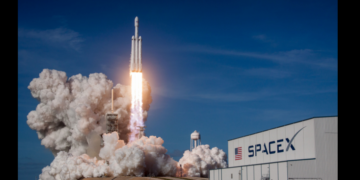


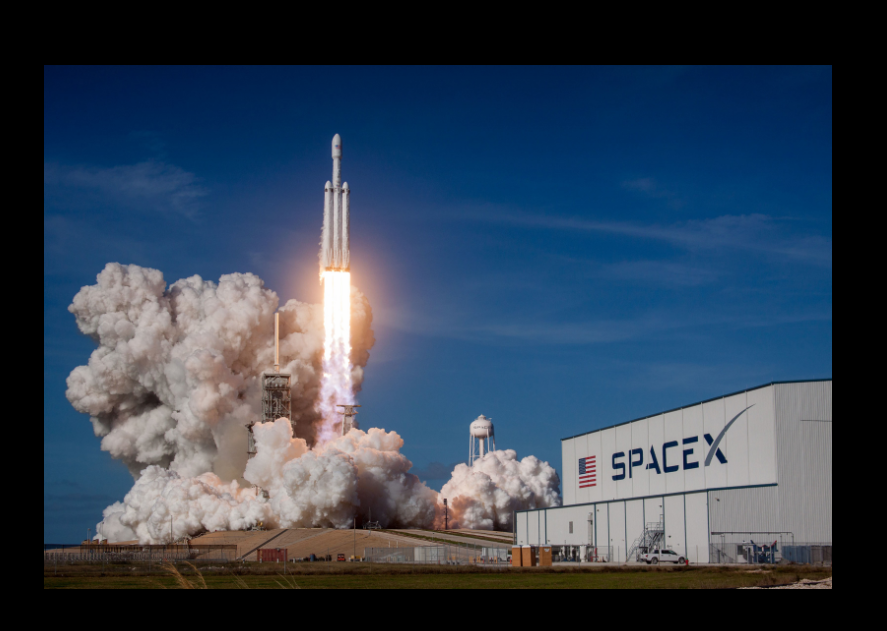
Space Exploration Technologies Corp. (NASDAQ: SPCX) was the largest initial public offering in history. With a valuation of $1.75 trillion at the IPO price of $135, it still had a $2.4 trillion valuation even after the pullback to $185 on its fifth trading day. Investors should not be surprised about this post-IPO volatility — what is obvious is that the options trading and leveraged exchange-traded funds (ETFs) may be contributing to a financial conundrum where “the tail wags the dog.”
For starters, only about 5% of all SpaceX shares were actually issued before the overallotment. The fully leveraged put and call options trading represented a significant figure versus that float. The 2x long and short ETFs also saw significant trading volume. Please do not even attempt to ignore the impact of leveraged ETFs and the total volume of the stock options.
Oggonomics tracked the share price moves and trading moves in SpaceX stock itself after the first five trading days. It would appear that a nearly instant launch of so many leveraged ETFs and the massive volume in stock options in the days after IPO played a role in the volatility of SpaceX here. All of this is without consideration of the SpaceX stock price drop on June 22.
Quantifying the cumulative sum of shares traded, options contracts and leverage ETFs is difficult. What is not difficult to take away from actual trading volume comparisons of the SpaceX stock itself versus the leveraged ETFs and options alone stands out and then some.
Stock options can be complicated enough for some investors, but the universal mechanism of options is that each single options contract traded (in both puts and calls) is equal to 100 shares of the underlying stock. So if 1 million options contracts have traded hands, it’s really long and short bets and hedges being placed on 100 million shares. 5 million contracts would represent 500 million shares. And those contracts all have expiration dates, many of which will be rolled out further on the calendar if investors and traders want exposure for longer than their initial purchase or sale.
Leveraged ETFs attempt to track share price movement rather than the actual trading volume, but investors trying to accomplish the same moves on their own trying to get a 200% price move of 100 shares would actually represent 200 shares of exposure if you consider share volumes and price moves equally. That’s not even intended to be an apples-to-apples comparison on volume versus price at all, but it has to be somewhat factored in for simplicity.
SPACEX PRICE & TRADING VOLUME ITSELF
SpaceX itself closed at $185.00 on its last trading day, after pricing at $135.00 on formal IPO. It saw a post-IPO trading range of $149.34 (after opening at $150.00) to a high of $225.64 on its third trading day.
Total trading volume after a 555.6 million share offering, plus the 83.3 million shares in the overallotment, the “float” total float until the lockup expiration should be considered nearly 640 million shares. SpaceX traded 519 million shares on its opening day, even though many investors plan to hold those shares without “flipping” them for quick profits.
The next 4 trading days saw 924 million shares combined, more than the entire float. Combining the opening day and first week total share trading volumes comes to over 1.44 billion shares — more than twice the entire float of shares that came public.
And SpaceX shares were lower ahead of the opening bell on June 22, 2026 (its sixth trading day).
SPACEX PUT/CALL OPTIONS VOLUME
The overall trading volume in puts and calls vary from exchanges to data trackers, but SPCX’s options market appears to have generated at least 1.72 million contracts in total volume across all strike prices and all expiration dates on its first day of trading alone. Here is some data according to Anthropic’s Claude…
On that first day, about 1.8 million SpaceX options contracts traded and calls outnumbered puts by about 1.3-to-1, reflecting bullish retail-driven demand. In dollar terms, roughly $2.8 billion worth of options premium changed hands. For a comparison, Claude showed that the SpaceX options handily surpassed Facebook’s (now Meta) 2012 options debut record of roughly 365,000 contracts.
Day 2 — about 1.45 million contracts traded, with puts making up 49.28% of volume and calls 50.72%. Futu News
Day 3 — roughly 2 million contracts
The combined total of the first 3 days was roughly 5.25 million SPCX options contracts. Now multiply that times the 100-share levels for each contract — 525 million shares on a fully leveraged basis.
Hedging, via put spreads, with much of the emphasis in September (after the first lock-up) will release even more shares to the public float.
Now consider that the June 18, 2026 expiration date was the first such expiration date so far of many more to come. Here are the current expiration dates that SpaceX will face, with more to come in weeklies as the dates approach:
- Jun 26, 2026
- Jul 2, 2026
- Jul 10, 2026
- Jul 17, 2026
- Jul 24, 2026
- Jul 31, 2026
- Aug 21, 2026
- Sep 18, 2026
- Oct 16, 2026
- Nov 20, 2026
- Dec 18, 2026
- Jan 15, 2027
- Feb 19, 2027
- Mar 19, 2027
- Jun 17, 2027
- Dec 17, 2027
- Jan 21, 2028
- Jun 16, 2028
- Dec 15, 2028
In short, investors can now hedge or speculate out to the end of 2028, some 2-and-a-half years out. The trading volume will be interesting, but the options’ open interest (unclosed positions) will eventually show how much long-term speculation and hedging in SpaceX is taking place over time. And with an unusual lock-up period from insiders and pre-IPO holders, this has already come into focus.
ALSO READ: 11 STOCKS & FUNDS THAT OWNED SPACEX PRE-IPO
TRADING DATA ON TOP LEVERAGED ETFs
With the market counting 10 or more leveraged SpaceX ETFs launched on the CBOE exchange in the first few days, investors should track the top leveraged ETFs that got the most attention by actual share trading volume.
Leveraged ETFs are not for every single investor. Maybe not even every speculator. They tend to have more day-trading characteristics than long-term investing characteristics. And they are intended to be for active traders who monitor prices closely and understand the risks unique to leveraged ETFs. Tracking over time is “challenging” at best because they track intraday moves and will face price decay over time. The funds can have direct share exposure and also use synthetic exposure, with a heavy derivative reliance via total return swaps, futures contracts, and also options. And those funds can also be rebalanced daily.
Leveraged ETFs have significant leeway in how they come up with trying to track the price moves of any assets the cover. This can involve the actual stock itself, but leveraged ETF investment policies also lean heavily on derivates via stock swaps, options and futures.
Investors have to then consider when leveraged ETF trading volume is seen in the “short ETFs” versus the “long ETFs” in the volatility. If the leveraged ETFs’ trading volume is far greater on one side of the “long/short,” then it implies more bets being made to the side with greater trading volume.
Here are some of the top leveraged ETFs tracking SpaceX alone…
2x Short SPCX Daily ETF (SSPC) by Leverage Shares had a total trading volume of more than 302 million shares trade in just the first four trading days. The 2x Long SpaceX Daily ETF (SPCH) by Leverage Shares saw is total volume reach 187.3 million shares in just its first four trading days. Leverage Shares’ disclosures for “Holdings & Characteristics” even says:
For periods longer than a single day, the Fund will lose money if underlying stock’s performance is flat, and it is possible that the Fund will lose money even if underlying stock’s performance increases over a period longer than a single day. An investor could lose the full principal value of his/her investment within a single day if the price of underlying stock falls by more than 50% in one trading day.
Because of daily rebalancing and the compounding of each day’s return over time, the return of the Fund for periods longer than a single day will be the result of each day’s returns compounded over the period, which will very likely differ from 200% of the return of the underlying security over the same period. The Fund will lose money if the underlying security performance is flat over time, and as a result of daily rebalancing, the underlying security’s volatility and the effects of compounding, it is even possible that the Fund will lose money over time while the underlying security’s performance increases over a period longer than a single day.
The fund manager also addresses “volatility decay” or “beta slippage.” It says:
Because of daily rebalancing, the Leverage Shares 2x Long SPCX Daily ETF (SPCH) can lose value over time even if SpaceX stock (SPCX) ends up flat, particularly in choppy, volatile markets. When SpaceX (SPCX) moves up and down repeatedly, the compounding of SPCH’s daily leveraged returns erodes value. This effect intensifies with SPCH’s 2x leverage and with greater volatility in SpaceX (SPCX) shares.
Here is a look at some of the other leveraged SpaceX ETFs price action and trading volume…
GraniteShares 2x Long SpaceX Daily ETF ($SPAL) Close $31.69, 4-day stats: Trading range $27.07-$46.57; Total volume 14.4 million shares.
GraniteShares 2x Short SpaceX Daily ETF ($SNK) Close $15.97, 4-day stats: Trading range $9.94-$22.72; Total volume 53 million shares.
Direxion Daily SpaceX Bull 2X ETF ($LOFF) Close $31.79, 4-day stats: Trading range $27.20 to $46.68; Total volume 10.3 million shares.
T-Rex 2X Long SpaceX Daily Target ETF ($SPAX) closed at $19.10 on its fourth day, with a trading range of $16.37 to $28.05 during that short period. Its total share volume was 15.1 million shares in those 4 days. T-Rex has 35 2x-Long ETFs and info on a 2x-Short ETF is not yet available, but T-Rex offers them in Strategy ($MSTZ), NVIDIA ($NVDQ), Tesla ($TSLZ), Bitcoin ($BTCZ), Circle ($CRCZ) and Coreweave ($CORD).
Direxion’s note also includes some risks right up front, beyond traditional risks and not being the equivalent of investing directly in SPCX:
Unlike traditional ETFs, or even other leveraged and/or inverse ETFs, this leveraged single-stock ETF tracks the price of a single stock rather than an index, eliminating the benefits of diversification. Leveraged ETFs pursue daily leveraged investment objectives, which means they are riskier than alternatives which do not use leverage. They seek daily goals and should not be expected to track the underlying stock’s performance over periods longer than one day. They are not suitable for all investors and should be utilized only by investors who understand leverage risk and who actively manage their investments. The Fund will lose money if the underlying stock’s performance is flat, and it is possible that the Fund will lose money even if the underlying stock’s performance increases, over a period longer than a single day.
And it also refers to its investments outside of just shares of stock:
The Fund’s investments in derivatives such as futures contracts and swaps may pose risks in addition to, and greater than, those associated with directly investing in securities or other investments, including imperfect correlations with underlying investments or the Fund’s other portfolio holdings, higher price volatility and lack of availability.
SO, WHAT’S IT ALL ADD UP TO?
SpaceX has already proven to be volatile. The rise of leveraged long/short ETF in their first four days, combined with the explosive trading seen in the stock options in just the first three days, has to be contributing handily to the stock’s underlying moves throughout the day.
Tracking the direction and volume of the leveraged long/short ETFs and put/call options may offer more insight to investors than the daily chats of talking heads in financial media. And the market is already focused on upcoming lock-up restriction dates for the coming months.
The analysts who work for firms in the underwriting firms will not even be able to issue their formal ratings and price targets generally for 25 days after the IPO date due to “quiet period” restrictions. Goldman Sachs, Morgan Stanley, BofA, Citigroup and J.P. Morgan were the joint book-running managers, but another 18 firms were also in the underwriting syndicate. Then there will be that many more talking heads about SpaceX in the financial media.
Oh, and this fails to mention that stock options can also trade for leveraged ETFs. That’s effectively like a derivative on top of a derivative.
In the end, this should all add up even before the talking heads are considered that the massive volume bets and hedges are likely to continue to remain in focus. And that’s without even trying to make any formal or informal price predictions for the days, weeks and months ahead.
SPECIAL DISCLOSURE
Jon Ogg of Oggonomics is an owner of SpaceX shares via a private transaction in xAI in the secondary markets in 2024. xAI was then merged and ultimately acquired by SpaceX ahead of the IPO. These shares are subject to a lockup period that is not yet fully known and could be longer than other lock-up expiration dates. None of the shares were sold at the IPO and cannot be properly hedged using options. Ogg’s holdings may decrease or increase in the future, depending upon market conditions at that time.
Oggonomics has no formal rating or price target on SpaceX. This reporting is for informational purposes only and is not a recommendation to buy or sell SpaceX, its competitors, or any other holders of SpaceX outlined in this report. Investing involves risk of loss under any circumstances, and investing in high-profile IPOs is much riskier than traditional investing in most stocks, ETFs and mutual funds.