



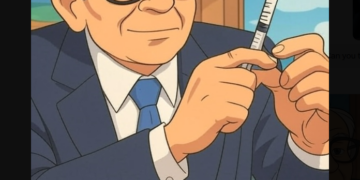



In late-2025 and early-2026, there were continued market expectations that the Federal Reserve would be cutting interest rates in 2026 and beyond. President Trump and many others lambasted Fed Chairman Jerome Powell for not cutting interest rates further. Then came Iran and the shock to oil prices. And new Fed Chair Kevin Warsh’s first public communications in his new role was a lot more hawkish than expected, and Warsh wants less communication from the Fed members and to let market forces indicate the true interest rate outlook.
Now there is a new outlook from BofA Securities — The Fed is likely to hike 75 basis points this year!
Be advised that BofA’s view is worse than what markets have priced in via the CME Fed Funds futures contracts. It is still rather scary to consider what the implications would be for borrowers looking for new mortgages, buying new cars and those consumers who live on credit cards and carry balances on them.
The current effective Federal Funds rate is roughly 3.63%, and the Federal Reserve’s official target range is currently at 3.50%–3.75%. The CME Fed Funds futures are currently forecasting that funds will be around 4.00% in December-2026. Just a month ago, the highest probability (42.1%) using the CME FedWatch Tool was a target range of 3.75%-4.00%.
GOOD NEWS & BAD NEWS
The good news is even a 75 basis point hike would not be back at the peak of the interest rate cycle. Back in 2024, that rate was 5.25%-5.50%. But the bad news is that this is still far north of being close to a “normalized” 3.00% funds rate. It also implies that longer-term interest rates will remain higher for longer — or go back even farther if an inverted yield curve doesn’t come into the picture.
A single rate hike would not likely be the end of the financial world as we know it. After all, inflation did come back up on the heels of oil and trade disruption after the start of fighting with Iran. If the Iran deal being negotiated does actually hold — again, if — then inflation should come back down as oil and trade begin to normalize. If the deal doesn’t hold and turmoil persists, then inflation may be more sticky than transitory.
BOFA GETS HAWKISH
According to BofA, Hawkish data and a hawkish reaction function point to interest rate hikes. BofA’s economics team sees three different hikes of 25 basis points each, coming from the FOMC in September, October, and December. If this occurs, then fed funds will be at 4.25%-4.50% by the end of 2026. The bank was also skeptical of the need for rate cuts that had already been seen:
We were skeptical of the need for cuts in 2025. Both the data and our updated read of the Fed’s reaction function suggest it will reverse those cuts in short order. We think the Fed will stay on hold next year. Inflation is likely to remain sticky, keeping the real policy rate from becoming overly restrictive.
Several other issues are at play. The labor market has been dissipating downside risks as “consumer resilience would likely put a floor under the labor market.”
BofA is calling the inflation data “just bad” and the inflation problem has gotten unambiguously worse. With supply shocks after tariffs, housing-driven disinflation is now seen as having mostly run its course. Other core services costs also remain very sticky.
At the June FOMC readout, nine policymakers forecast hikes this year. Five of those were voting members. BofA also reassessed its view that labor tightening is a pre-requisite for hikes. The outlook from the Fed also showed “inflation persistence” with a view of 2.5% core PCE by the end of 2027 even as recent one-off effects would have rolled off the year-over-year rate by that time. And the Fed’s projected policy path also moved up.
Warsh didn’t push back against rate hikes, and repeatedly “emphasized the importance of restoring price stability and suggested policy isn’t particularly restrictive.” Warsh was also noted to be “much more circumspect about AI-driven disinflation” versus his prior remarks.
BofA does see several issues that could stop the Fed from hiking interest rates in 2026:
- A sharp slowdown in payrolls this summer could push the unemployment rate up.
- A few soft core PCE prints could start dragging the year-over-year rate down.
- A major equity sell-off could preclude hikes by slowing demand significantly.
- Warsh himself was perhaps being strategically hawkish to gain credibility.
- Also plausible that the Fed starts hiking after the midterms (December) or goes once per quarter.
- That said, BofA believes that Warsh is just buying time until inflation falls or his task forces make the case to stay on hold.
It’s also possible that a rate hike could come sooner than even BofA is forecasting for September. A July move is now deemed to be “in play” at this time, but the firm believes the Fed will want to see the summer labor data before it begins hiking the funds rate. BofA also noted:
And then there is the what-if scenario that the FOMC might have to hike rates by more than 75 basis points. This isn’t BofA’s base case, but it is nonetheless included in the short report.
IN THE END
Not every firm on Wall Street sees rates rising so much. The flip-side is that most firms have backed away from calling for persistently lower interest rates than had been expected just six months ago and in 2025.