













The United States has taken several stakes in public companies in 2025. Some of the news has been received well, and some has faced criticism that President Trump is picking winners by taking stakes in either unprecedented or unnecessary moves. There, of course, two sides to this coin. But there is also a case to be made in the “America First” effort here.
For starters, the U.S. government is no stranger in history when it comes to protecting some of the national corporate treasures. These often employ tens of thousands of people. They make significant contributions to economy, and their trading partners (and the public) often rely heavily on these companies being able to pay their bills and to remain in operations. One difference in today’s economy versus past economies is that these stakes being taken are not during a time of national crisis.
There is also the possibility that stakes being taken in 2025 are just the start of what may become a sovereign wealth fund to benefit future generations from the investments being made. If this ends up being the case, the U.S. could be joining the likes of Norway ($1+ trillion in holdings), China ($1+ trillion), Abu Dhabi $700+ billion, Kuwait ($700+ billion), Qatar ($400+ billion), and many others.
Perhaps the largest difference in a potential sovereign wealth fund in the making is that the U.S. government’s holdings are tiny by any realistic comparisons. This is certainly true in absolute dollars, and even more so when comparing these holdings to each nation’s (with a sovereign wealth fund) equivalent to Gross Domestic Product.
The most recent list of companies with the United States as a new shareholder, not only those based in the U.S., include stakes in the following:
Intel Corporation (NASDAQ: INTC) – $8.9 billion, for a 9.9% stake
MP Material Corp. (NYSE: MP) – $400 million for preferred shares plus warrants, equal to a 15% stake in total
Lithium Americas Corporation (NYSE: LAC) – a 10% stake for part of $2.26 billion loan restructuring
Trilogy Metals Inc. (NYSEArca: TMQ) – $35.6 million for a 10% stake, plus warrants for another 7.5% stake
The U.S. now also has a “golden share” as part of its approval of U.S. Steel being acquired by Nippon Steel of Japan. While this is technically not an equity stake, it was part of a national security agreement which gives President Trump significant veto power over major decisions like wages, closing/idling factories and more. That veto power will pass to the Treasury and Commerce departments (or future presidents) after Trump’s tenure is over.
While the U.S. Steel “golden share” may have little or no significant financial value in actual dollars, the other stocks have soared after the investment news and since.
The Trump Administration also reached a deal for a percentage of the sales that Nvidia Corporation (NASDAQ: NVDA) and Advanced Micro Devices, Inc. (NASDAQ: AMD) will sell to China regarding AI-chips.
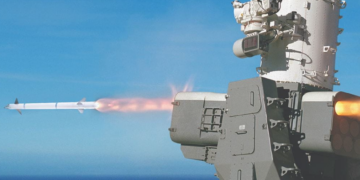
There have also been suggestions from inside the government that the U.S. could pursue stakes in top defense firms even before pushing for much higher missile and drone production. How an investment of this sort would work remains to be seen, but the stocks of drone and missile manufacturers have surged in recent weeks. Lockheed Martin Corp. (NYSE: LMT) and RTX Corporation (NYSE: RTX) have both seen strong gains as they make the well-known Patriot missiles. There are many any defense contractor companies that have their own roles in the various drones used by the U.S. Armed Forces.
Now it’s time to consider some of the prior investments that the U.S. government has made into public companies in the past. The Global Financial Crisis demanded drastic measures to stave off a true financial meltdown that would have sent the U.S. and global economies back into a “Financial Stone Age.”
There have been arguments that the government bailed out the banks rather than the people, but by bailing out the banks the government kept the liquidity running and ended up preventing what might have been millions of people out of work and counter-parties and customers alike from facing an unprecedented situation of zero access to their own capital and an inability to transact business.
https://projects.propublica.org/bailout/list