















Chipotle Mexican Grill Inc. (NYSE: CMG) was perhaps the greatest growth stories in the fast-casual dining and quick-serve restaurant sector. It may also be one of the greatest missteps ever taken by McDonald’s Corp. (NYSE: MCD) when the company divested and sold all of its shares back to the company in 2006. Then Chipotle came public in a formal initial public offering. And Chipotle grew wildly year after year. That was then.
While Chipotle is down over half from its all-time peak, but it’s also down 25% from its 2026 peak above $40 in January-2026. One analyst has upgraded Chipotle, with a serious caveat. One analyst has downgraded it in the same week.
The question today is whether or not Chipotle is one of those “buy and hold forever” stocks that retirees and long-term investors should own — or not. Sales may still grow 10% next year, but Chipotle is presently valued at 26.5-times expected 2026 earnings (and 22-times 2027 earnings expectations if it lives up to Wall Street’s expectations.
Does a McDonald’s comparison even matter at this point for relative value? McDonald’s is valued at about 21.5-times 2026 earnings and just under 20-times expected earnings in 2027. If that comparison does hold merit, then income-oriented investors should note that McDonald’s offers shareholders a 2.7% dividend yield based on its $278 share price. Chipotle has not paid a dividend before and pays no dividend at the present time. The company’s own dividend policy (see below) also indicates that the company does not plan on paying a dividend in the foreseeable future.
Now, let’s just focus on Chipotle’s stock.
Morgan vs. Morgan: Upgrade and Downgrade
A June 5, 2026 upgrade from JPMorgan took Chipotle’s formal analyst rating to Overweight from Neutral. That’s the same a “Buy” versus a “Hold” at many firms. Where this upgrade gets catchy is that JPMorgan simultaneously lowered its price target down to $35 $38 in the same call.
After an in-person meeting, JPMorgan calls it a re-rating at this point. Chipotle’s CEO and CFO did acknowledge the food chain’s past mistakes and discussed their future opportunities. JPMorgan now sees the stock as having a “rare valuation opportunity” now that its valuation reflects a more moderate growth profile that is still indicating above average growth.
When firms cite valuations, it does imply “value” to some investors looking out beyond the next earnings report (or a few reports). Does that make a for a long-term value stock? Or what about the so-called GARP for growth at a reasonable price?
Morgan Stanley downgraded Chipotle to Equal-Weight from Overweight on June 3. The firm slashed its price target $37 from $49 in that call. Morgan Stanley highlighted moderating growth prospects. Morgan Stanley also noted that value-seeking consumers are up against a backdrop of persistent inflation at the same time that geopolitics has raised the price of gasoline, along with margin pressure from cost inflation, lower sales leverage and modest traffic growth.
The JPMorgan upgrade should stand out versus the Morgan Stanley downgrade. JPMorgan’s new rating is higher, but its price target is still less than that of the more cautious Morgan Stanley. Morgan Stanley sees better value opportunity in Yum! Brands (NYSE: YUM) based on its own operating metrics for KFC and Taco Bell, and there is potential value creation if the Pizza Hut business is sold or jettisoned off via a spin-off or IPO.
An Independent View (or Conundrum)
So, what about the story beyond analyst calls? A lack of dividends. A premium valuation. Slowing growth. Value vs. Growth. Maybe not a case of “something for everyone.” And a model that is somewhere in between quick-serve (fast food) and casual dining (sit-down).
Chipotle has a market value of $36 billion, versus $194 billion for McDonald’s. Chipotle obviously has more locations it can add stores compared to McDonald’s, KFC, Taco Bell and Pizza Hut. Morgan Stanley noted Chipotle’s guidance for of 350-370 new stores (versus a total of over 4,100 restaurants on its last report) after opening 49 company-owned restaurants in Q1-2026 (42 with a Chipotlane). Chipotle has been slowly adding more international locations, although its opportunities are still abundant outside of the U.S.
During Q1-2026, Chipotle repurchased $700.8 million worth of stock (at an average price $36.14 per share); and it had about $1.0 billion remaining on its current share repurchase authorization. Since it pays no dividend and plans to pay no dividend for some time, future buybacks seem likely.
One other issue which hurts Chipotle is not a cheap destination for cash-strapped consumers looking for a deal. The company has raised menu prices, but Q1 results showed that food, beverage and packaging costs were 29.6% of total revenue versus 29.2% a year earlier. Chipotle cited cost hikes to inflation (primarily beef and freight costs) and higher produce usage — partly offset by lower dairy costs, avocado costs and the menu price hikes. The average chipotle ticket prices range from $8.79 to $9.00 before the cost of beverages and extra add-on items (guacamole or extra meat) to an order.
Chipotle may need some help from outside of the company for it to get back on a more solid growth track. The company has a lot going for it, even after its negative PR tied to portion size changes. Some customers couldn’t get enough of Chipotle meals, but that has also been under pressure as the consumer feels squeezed.
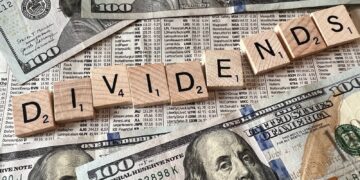
Chipotle’s no-dividend policy makes it less attractive for income-oriented and retired investors who want that “mailbox” money. $MCD and $YUM do pay dividends. The Dividend Policy from Chipotle’s last annual report indicates no dividend will be paid any time soon:
We are not required to pay any dividends and have not declared or paid any cash dividends on our common stock. We intend to continue to retain earnings for use in the operation and expansion of our business and to repurchase shares of common stock (subject to market conditions) and therefore do not anticipate paying any cash dividends on our common stock in the foreseeable future.
While Chipotle does have the stock buyback plan live and in place, it’s not the most significant buyback plan out there based on its total market cap. Still, it seems that Chipotle is likely to keep using excess capital to repurchase more and more shares.
As noted, Chipotle’s stock at the current price premium valuation to $MCD or $YUM may get in the way of retirees wanting to own the stock.
Chipotle seems to remain a stock in transition from growth to somewhere around “value” but at a premium valuation. That transition can be a painful process for investors who were used to solid numbers year-in and year-out. That transition period has also remained the case for longer than many of those same shareholders would like to consider.