























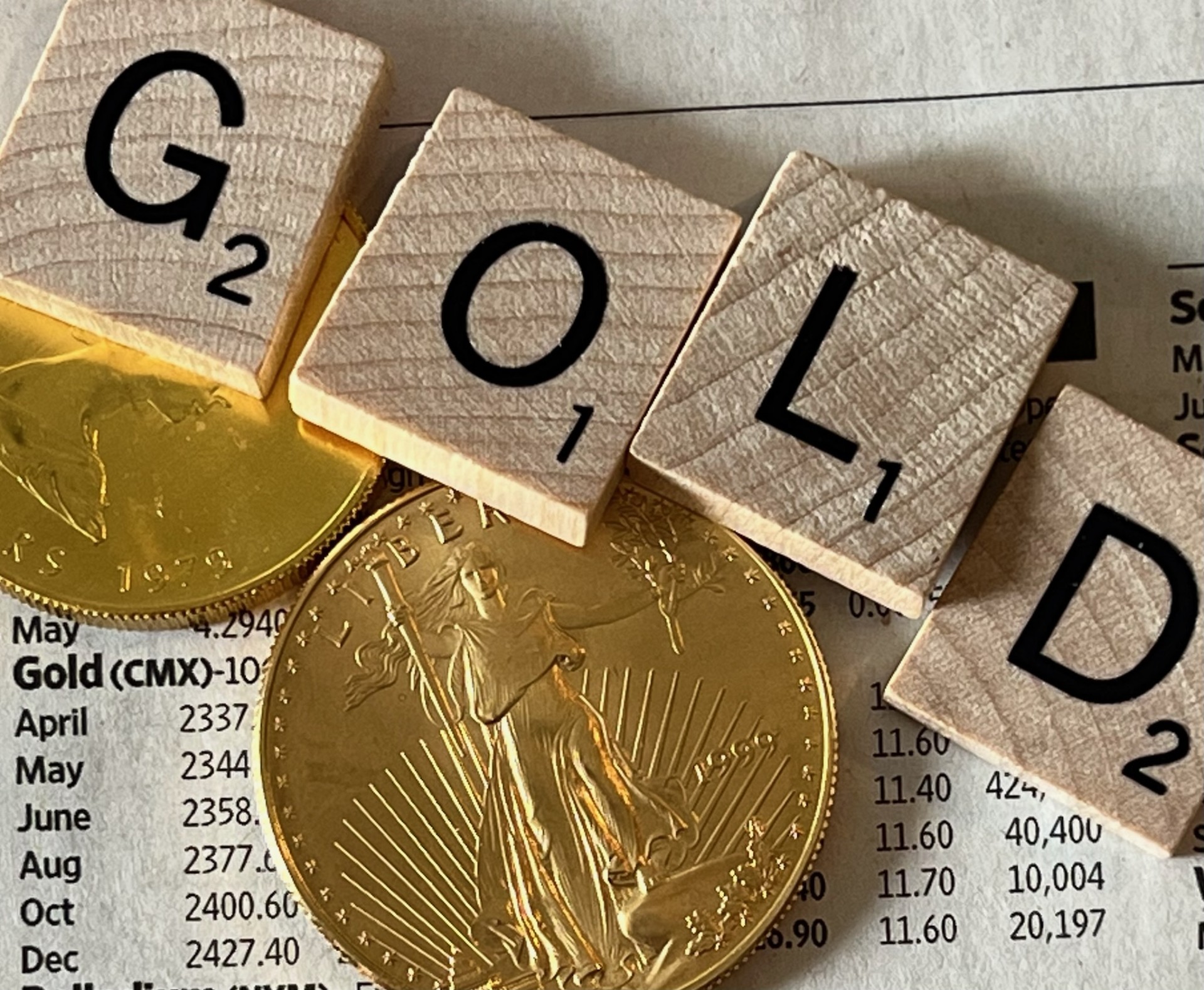
Gold was recently down about 30% from its blow-off high of over $5,400 per ounce earlier in 2026. It should not be all that shocking that interest in gold was down after the major bull market doubled its price. That’s what happens in boom-bust markets. The problem today is that the “bust” scenario may not be a long-term issue. In fact, with gold holding above $4,000 there are some ongoing and developing reasons that gold investors may want to pay attention again.
Oggonomics believes that gold is a suitable holding for almost any type of investor. Even if gold pays no dividends, the reality is that this is the go-to hard asset that can appreciate in good times and still act as a hedge against other assets in times of uncertainty. Gold also has thousands of years of history backing it up, and central banks have to own gold just likes kings did on centuries past.
The question for mid-2026 is whether or not gold has truly formed a bottom — or if it is close to bottoming out. Either scenario may offer a great opportunity for those who look beyond the news headlines and an annual calendar.
Investors should also keep in mind that it’s almost impossible to catch the ultimate bottom in any asset. Now is the time to decide whether or not it’s a good time to start buying again. This looks at the positive trends and developments that are in the market after such a strong sell-off.
First and foremost, gold investors should not expect a repeat of the mega-bull cycle from Q4-2024 into Q1-2026. It is rare to see a precious metal double in price in a fairly short period of time. And very few economists and analysts are expecting the mega-bull market to instantly turn back on.
Oggonomics wants to “look under the hood” to see what might support gold close to current levels and drive it higher into 2027 and beyond. There is no reason that gold can’t fall back under $4,000. There are many reasons that it might not either.
This list of positive trends and developments is probably incomplete. It also doesn’t go on and on about each point. And there are never any assurances that the positives will overcome selling pressure if that occurs again. So, here goes.
China Keeps Buying…
The People’s Bank of China was shown to have purchased 15 metric tons of gold in June (2026). This brought the central banks total gold holdings up to 2,346 tons. While adding 0.6% to reserves in a month isn’t massive news, June actually marked the 20th consecutive month that China’s central bank added to its gold reserves.
More Central Banks Plan to Buy…
One additional boost is that the World Gold Council’s annual Central Banks Gold Reserves Survey showed that 89% of reserve managers see central banks in general continuing to add to their gold reserves over the next 12 months. And 45% of those managers said they expect their own central banks to add to their gold reserves over the next 12 months.
More Central Banks Adding Gold as Reserve Asset…
The WGC’s report also cited that gold recently surpassed U.S. Treasury bonds as the top reserve asset. That may only continue ahead as well, as 83% (versus 76% last year) of reserve managers believe gold will account for a higher share of their total reserves over the next 5 years.
The De-Dollarization Trend…
While many investment banks have pointed to de-dollarization over the last year, the World Gold Council report showed 74% of the respondents expecting the U.S. dollar’s total share of global reserves will be lower in five years. That capital can end up in many assets of course, but gold is the other “run home to momma” asset outside of U.S. bonds and dollars.
Geopolitical Risks…
The war between Russia and Ukraine is not showing any end in sight. U.S. and Iran hostilities are continuing, as each cease-fire has ended up as a delay tactic. Gold is often considered the global go-to hedge against geopolitical risk. What if other skirmishes break out?
Inflation Cuts Both Ways…
Gold is often viewed as an inflation hedge. Gold often gets punished if interest rates are rising (again, gold pays no dividends nor pays any interest). But as a hedge against the loss of buying power, many investors consider gold as the top go-to hard asset to own.
Just How Oversold Gold Looks…
A fresh report from Sprott signaled that gold is massively oversold by every meaningful metric, and that report suggests gold will likely see a cyclical bottom before September. Their view is that gold’s rescue wagon will primarily be driven by currency debasement.
Gold’s Chart and Technicals…
The moving average convergence divergence (MACD) reached extreme oversold levels in March, but after a slight recovery that MACD hit grossly oversold levels again when gold traded under $4,000 at the end of June. Using the SPDR Gold Shares ($GLD) ETF, gold broke under its 200-day moving average in early June and then continued to sell off another 10% from there. At $375 now, the 200-day moving average is up around $411. Gold rarely trades under its 200-day moving average, and generally a further 10% has provided a buying opportunity for long-term investors.
YTD Performance Still Negative…
Gold had enjoyed that major bullish run, but the $GLD ETF was down about 8% before its recovery in recent trading days. It was still -5% YTD on last look, even if GLD is up 15% versus a year ago. That means many gold buyers won’t likely say “Damn, I missed it!” yet. That doesn’t mean any and every gold buyer should pile in all at once, but it still means that bargain hunters may still be interested.
U.S. Debt Keeps Rising…
One problem facing the U.S. is that the total debt load is now almost $40 trillion. That has risen about $4 trillion in the last year. The U.S. is now spending more on debt servicing (interest expense) than it spends on the military. Neither party in Washington shows any real plans of cutting the deficit either. The U.S. has a 122% debt ratio compared to GDP.
The U.S. Isn’t Alone Drowning in Debt…
Most major nations are also drowning in debt. They also show no direct paths to stopping their deficits. Japan is now nearing debt levels of 250% to GDP. The United Kingdom is running at 110% of debt to GDP and France is at 115%. China’s debt to GDP is also high, with wide variations from source to source as data is not precise.
Ongoing Debasement Concerns…
The international de-dollarization trend impacting the U.S. may not be solely an “us” problem at home. As nations continue to take on more debt, the debasement of fiat currencies is a risk in all major nations. Quite simply, this is more currency being printed for monetary expansion at a faster rate than real economic growth. This lowers the intrinsic value of currencies over time, and it has become the number one tool of central banks any time they need to pay for the next major economic problem. Gold is the go-to hedge against debasement.
Interest Rates Remain High, For Now…
As U.S. interest rates have remained stubbornly higher than in past years, the “higher for longer” trend has weighed on gold in 2026. If you can earn 4% or 5% in what was deemed the “risk-free” rate of return that may have more appeal than gold (again, it pays no interest). What happens if and when that changes? If rates have peaked or close to peaking, this may give gold buyers some cover that perhaps it’s time to start going back into gold again.
Mining & Production Costs Keep Rising…
Mining is more expensive each year. Labor and environmental costs keep rising. What used to be all-in sustaining cost of $1,000 per ounce of gold is often being reported as over $1,700 now, with new projects often running at far higher costs. As the cost to produce an ounce of gold keeps rising, it should mean that gold’s floor is much higher than it used to be. Imagine if miners said they can’t produce gold at profitable levels and shut or reduce production. That supply shock would likely send prices even higher.
A Lot Has Been Skipped…
This observation on gold does not address many issues that also support gold. It also skips over the negatives that could keep even more pressure on gold prices. Oggonomics and other financial sources cannot cover every aspect of every topic. Even though BofA trimmed there 2026 average gold price forecast by 14%, the firm still sees the average price of $4,360 above the current $4,000 level.