



















Investors love companies with strong earnings. The love those companies even more when they expect that earnings growth to continue. The notorious Peter Lynch even preached for investors to focus on a company’s actual earnings performance rather than just chasing trends or predicting economic events. So, what happens when investors hear about an “earnings supercycle” that is kicking off?
An earnings supercycle is when companies enter into an extended period with very strong earnings growth. This strong earnings growth can last for many years, and those individual earnings supercycles tend to be driven more by a company’s fundamentals and business model (or specific catalysts) more than being driven by shorter-term cyclical factors like an improving economy.
Oggonomics has screened some of the top profitable companies in the S&P 500 and other large cap stocks for trends that will positively affect earnings over the coming years. It’s no secret that we are in an AI-driven supercycle for technology, semiconductors, computing, capex and anything tied to AI. The issue now in 2026, after years of growth stocks winning, is that many investors are more interested now in “the rest of the economy” that may have more down-to-earth valuations and more room to run.
In order to qualify for an earnings supercycle in this screening and review, there are multiple criteria that have to be considered. These companies:
- must be among the top players in their sectors,
- must have long operating histories to use as historical references,
- must have specific catalysts other than just a broad economic expansion,
- must already be continually profitable with years of earnings growth expectations ahead,
- and must already pay dividends (otherwise it’s all just on paper) with likely dividend growth ahead.
This screen and review looks beyond just focusing on the AI-supercycle and space-race supercycle. Gold and precious metals have entered into a supercycle. The reshoring of manufacturing brings another supercycle. And there is about to be a supercycle that many of us might not like talking about because we all eventually face mortality.
Be advised that there is no free lunch when it comes to investing. Earnings supercycles do not come with guaranteed returns for investors. Wall Street can over-estimate the situation or get their predictions wrong. Companies can grow earnings but still fall short of Wall Street estimates. And regulations and geopolitical risks can change a story overnight. It happens, even to the best of companies and even to companies in a supercycle.
3 EARNINGS SUPERCYCLES
The S&P 500 has risen 74% and each of these three earnings supercycle candidates have been given the same 5-year reference. The current share prices were as of August 10, 2025 and were put with each stock’s market cap, 52-week range and their respective dividend yields.
Please read the disclaimer below for deciding whether any of these stocks meet your own suitability. Here are three large cap stocks that are expected to enter into an earnings supercycle that last for many years ahead.
NEWMONT – GOLD IN THEM THAR HILLS!
Stock Price: $117
Market Cap: $123 Billion
52-Week Range: $67.11 to $134.88
Dividend: 0.9%
5-Year Return: 97%
Newmont Corporation (NEM) is the world’s largest gold producer, after completing its acquisition of $16.8 billion acquisition of Newcrest Mining Limited in 2023 and a $10 billion acquisition of Canadian gold producer Goldcorp in 2019. While gold’s (and silver’s) blow-off top to $5,500 per ounce in early 2026 may have marked a near-term peak for gold, the current price landscape for gold is still significantly higher than miners’ and producers’ average realized gold prices in 2025, 2024 and prior years.
It’s currently a “gold supercycle” with gold demand so high. The current $4,000 to $4,500 range offers gold miners significant earnings leverage, and that is even as production costs have risen. That supercycle should hold as long as gold prices do not meaningfully fall and remain under $3,500 (an average for 2025 prices). With the investing demand and central bank demand, and other macroeconomic forces (de-dollarization and diversification), most investors do not seem worried about a gold price crash. Unfortunately, even the biggest gold bugs of them all just can’t ignore that commodities can go lower.
Newmont’s Q2-2006 net income of $3.2 billion in Q1-2026 and $2.2 billion in Q1-2026 were massive — over $5.4 billion in the first half of the year. Net income in the first half of 2025 was $3.95 billion and the second half of 2025 $3.13 billion. It is also currently generating record free cash flow. Newmont’s per ounce production costs vary from $1,000 to $2,000 per ounce ($1,621 all-in as of Q2-2026) and it forecasts 5.3 million ounces for 2026 production.
As Newmont pays down debt, it should have significant room for higher dividend payouts as time goes on with a low dividend payout ratio of less than 20%. It also has a current $6.0 billion share repurchase plan that had $4.3 billion remaining, with more buybacks likely ahead.
Wall Street’s analysts with 12-month upside price targets: BofA ($132); CFRA ($127); Jefferies ($146); Raymond James ($137); RBC ($135); Scotia ($147); and TD Cowen ($127). CFRA’s report says:
Our 5-STARS (Strong Buy) rating reflects Newmont’s position as leading gold company with industry’s largest reserve base, exceptional FCF generation, and sustainable shareholder returns. Portfolio transformation is complete with premier long-life, low-cost operations in favorable jurisdictions. Gold prices averaging $4,414/oz in Q2 remain well above conservative $2,000/oz reserve assumptions, providing substantial potential for valuation creation in its reserve base. Strong balance sheet with $9.0B cash supports capital allocation framework.
ALSO READ: IS IT TIME TO UNLOAD APPLE STOCK???
ROCKWELL – AUTOMATING PRODUCTION & RESHORING
Stock Price: $435
Market Cap: $48 Billion
52-Week Range: $328.70 – $497.36
Dividend Yield 1.25%
5-Year Return: 42%
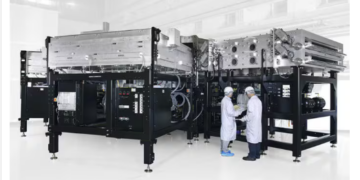
Rockwell Automation (ROK) is essentially the king of both manufacturing and factory automation, and it has the most overlap with an AI theme. It is a longstanding winner and leader in automation. After a series of earnings missteps in prior years, Rockwell is back on track and showing growth in revenues and earnings.
Rockwell’s earnings (EPS) of $10.53 EPS in 2025 are supposed to hit $13.22 in 2026 and $14.83 — and BofA sees $16.81 EPS out in 2028. Rockwell’s reshoring opportunities and ongoing global operations today should create cyclical and secular tailwinds, which should drive its own earnings power higher versus prior cycles.
Wall Street’s analysts with 12-month upside price targets: BofA ($500); Bernstein ($501); CFRA ($550); Citi ($536); Evercore ISI ($485); DA Davidson ($500). CFRA’s latest report does address that AI is part of the story:
Our Buy rating reflects ROK’s long-term earnings growth as automation demand increases. Rising labor costs and shortages support demand for ROK’s products that enhance workforce productivity. Factory reshoring creates additional catalysts as automation enables the reshoring boom. ROK’s agentic AI initiative has potential for market share expansion through intelligent process optimization. We see organic sales growth accelerating to high-single-digit expansion in FY 26 on higher volumes and pricing actions.
SERVICE CORP. – DON’T FEAR THE REAPER
Stock Price: $83
Market Cap: $11.5 Billion
52-Week Range: $68.41 – $90.99
Dividend Yield 1.65%
5-Year Return: 30%
Service Corporation International (SCI) is the top deathcare provider (their own wording, too!) for products and services in North America with roughly a 17% market share. Unfortunately, we will all be prospective clients one day for SCI’s (or a competitor’s) funeral services, cemeteries, or cremations. The big earnings supercycle driver for the coming 10+ years will be demographically charged in SCI’s favor with an average life expectancy of 79 years of age today. Here is how:
- Baby Boomers are now 62 to 80 years old and account for roughly 62.5 million Americans who are starting to enter the average age of mortality.
- The Silent Generation (age 81+) is another 12.4 million Americans who have already exceeded the average life expectancy range.
- With Boomers and the Silents combined, that’s about 21% of the adult U.S. population that has reached or is nearing the average life expectancy range.
SCI has seen strong average revenue per service even though funeral services were down 1% in Q2-2026 from a year earlier. After earnings of $3.85 EPS in 2025, Wall Street sees earnings rising to $4.18 in 2026 and to $4.60 in 2027. An estimate from BofA has 2028 pegged at $5.06 EPS. Imagine what that earnings picture might look like from 2031 to 2035 when Boomers are reaching 85 to 88 years of age. Did you see its earnings and stock from 2020 to 2021 (stock $35 in June-2020 to $70 in December-2021) during that pandemic thing? SCI has recently increased its dividend again and increased its existing stock buyback plan to $600 million.
Wall Street has a relatively small number of analysts covering the stock, but here are the analysts with 12-month upside price targets: BofA ($100); JPMorgan ($100); UBS ($105). And BofA’s investment rationale says:
SCI is a long-term investment in the US aging demographics. While we wait for the aging wave to aid results in a more meaningful way, the company drives shareholder returns via continued share repo and increasing dividends while building a pipeline of revenue growth through pre-need sales. We believe the death care industry is relatively more resistant to a recession.
DISCLAIMER
This report is in no way intended to be an open-ended recommendation to buy these stocks or other stocks. Every investment decision regarding individual stocks and baskets of stocks should be made with the assistance of a financial advisor. Investing even in supercycle earnings stocks comes with risks that may result in losses.
Any research ratings and price targets have been assigned to each firm mentioned in this report. Oggonomics does not issue formal ratings and price targets of its own.
Again, there is no such thing as a free lunch when it comes to investing. There are also never any guarantees that stocks rise. Earnings supercycles can fizzle. Companies can miss Wall Street estimates, even when earnings are rising, leading to lower share prices. A recession or lagging economy can wreck even the best and most insulated stocks. Geopolitics and U.S. political winds can get in the way. The U.S. deficit of roughly $40 trillion will only get worse.