













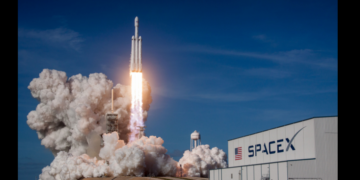


SK Hynix Inc. (SKHY) conducted its IPO in July, about a month after the SpaceX IPO and ahead of the coming AI-related IPOs that are eagerly anticipated. The Korean chipmaker sold 177.9 million ADRs at $149 per share in its July offering. This was a premium to its shares traded in Seoul, South Korea and it still trades with a valuation gap between its home shares and the ADRs. It now appears to be one of Wall Street’s top picks for semiconductor investors.
SK Hynix’s ADRs have traded in a range of $124.80 – $194.80 in the wake of its IPO, and after closing at $143.73 the verdict seems to be that Wall Street expects much stronger gains ahead. Its shares were trading close to $150 on Tuesday morning in response to a SanDisk pact.
If the new slate of analyst ratings proves to be true, Wall Street now has favorable views of SK Hynix that are greater than many U.S. semiconductor companies. Some analysts are even calling for 50% to 100% upside to their price targets.
BofA issued a new Buy rating and $250 price objective, noting that SK Hynix should maintain hold of over 40% market share in both HBM (high-bandwidth memory) and QLC NAND-based enterprise SSDs from now through 2028 — culminating into an operating profit super-cycle that is not priced into its shares.
Stifel issued a Buy rating and a $240 price target, citing improved execution where memory demand exceeds supply.
William Blair called SK Hynix a memory leader for the AI era that should help close a valuation gap between it and Micron Technology (MU). The firm initiated coverage as Outperform with a $260 price target.
Here are how other analyst summaries look so far:
Barclays – Overweight and $300 price target
Cantor Fitzgerald – Overweight and $300 price target
Needham – Buy and $200 price target
RBC Capital Markets – Outperform and $200 price target
Rosenblatt – Buy and $320 price target
UBS – Buy and $204 price target
Wedbush – Outperform and $200 price target
Oggonomics always reminds investors that no single analyst report should ever be the sole reason to buy or sell a stock. That is even true when multiple analysts issue new ratings after an IPO quiet period ends. Fundamentals and the macroeconomic picture can change in a moment. Analysts can get their thesis wrong, and there are never any assurances that their price targets and expectations ever come to fruition. And no analyst report has ever been issued with money-back guarantees if investors lose money.
The analyst ratings and price targets noted in this reporting are from the firms which issued the reports. Oggonomics issues no formal ratings or price targets on individual stocks.