
























Apple Inc. (NASDAQ: AAPL) is one of the greatest growth stories in American business history. It’s also the second largest stock of them all with a $4.5 trillion market cap. And it is wildly unpopular in the investing community to bet against Apple’s stock.
Wall Street has just now issued another downgrade to “Sell” rating on the mighty Apple– its second “downgrade to Sell” in less than a month!
It was on July 14 that KeyBanc Capital Markets downgraded Apple to “Underweight,” their equivalent of a “Sell” rating with the outlook that Apple could lose $1 trillion in market cap. Now an August 10 downgrade has been seen. Jefferies has downgraded Apple to Underperform from Hold and its price target was cut to $263.66 from $285.56.
Monday’s downgrade from Jefferies implies downside of about 16% from Apple’s prior close of $313.06. Apple’s shares were trading down about 2.3% at $306 on this downgrade.
Investors may want to keep in mind that Apple’s stock is still up over 12% YTD and up 33% over the last year even after Monday’s drop in the stock. For a reference, the S&P 500 is up 13.5% YTD and up 21.5% over the last year.
The interesting note in the Jefferies downgrade is that, like KeyBanc’s downgrade, it’s not based just on valuation after shares recently hit an all-time high.
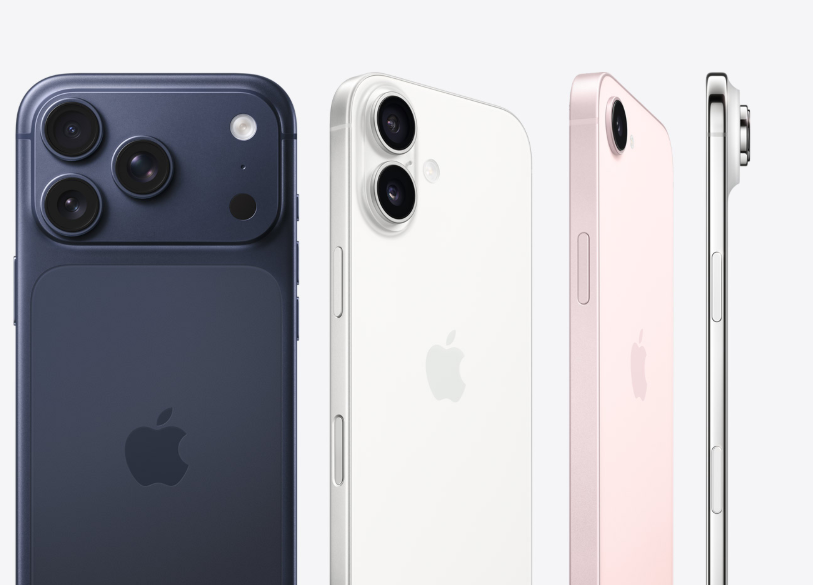
Jefferies cited that Apple has increased the value of iPhone 15 and iPhone 16 models across key markets in recent days. This increases the chance of price hikes for the newer iPhone 17 models.
At the same time, the Jefferies report pointed out that Apple has also dropped its trade-in price for certain iPhone models in China. Due to dealer price negotiations there, the differentiating price changes may not have any implication for new iPhone selling prices, but higher trade-in values in the key U.S. market may drive stronger iPhone 17 demand while the limited feature upgrades on the iPhone 18 may see more pressure on demand for the newer phones.
The Jefferies downgrade cited its own supply-chain checks, noting that Apple has cancelled the 20th anniversary all-glass iPhone model. This was all-glass launch was expected out in September 2027. The firm cited poor production yield and sees the news as a major setback.
It also looks like higher iPhone prices due it its prior warning of price hikes due to rising memory costs. The report cited that an additional 4 gigabytes of memory would likely increase the cost of materials for future models by $60 to $70 on each phone. Jefferies believes the plan was to extend all-glass phone features to future iPhone Pro and Pro Max models.
ALSO READ: 6 Stocks to Sell at All-Time Highs!
Monday’s downgrade is calling for Apple’s earnings to take a hit out well beyond 2026. Jefferies trimmed its FY28 earnings (per share) estimate by 2%. And FY29 2029 earnings estimates were trimmed by an even larger 3% in the call.
KeyBanc’s earlier downgrade had similarly noted that Apple was facing a weak U.S. iPhone upgrade cycle and that U.S. carriers were pulling back on iPhone price subsidies.
In the end, the reasons for downgrading Apple to the equivalent of a “Sell” rating are different from Jefferies and Apple. The one common theme is that both Jefferies and KeyBanc are now offering the view that Apple will give up all of the share price gains from 2026 — and then some.
At $306, Apple’s stock has a 52-week range of $223.78 – $344.57 and a consensus analyst price target closer to $322.